

Success Culture explores how culture shapes the way we think and live. Subscribe for weekly essays on British and American culture, building a life abroad, and questioning the assumptions we’ve inherited about the good life.
First: I had the joy and privilege of speaking at Wheaton College’s chapel last week. You can listen to a recording of my talk here.
Second: Over lunch at saga, I met with students in a preaching class. We talked about everything from contextualizing sermons for a middle-class versus working-class audience to how cultural awareness is key to navigating church conflict. A book I recommended was Priya Parker’s The Art of Fighting. I truly believe this is a book EVERY PASTOR SHOULD READ as it offers a needed corrective to how churches and parachurch organizations understand conflict today. I wrote a review of The Art of Fighting for CommonGood. You can read it here.
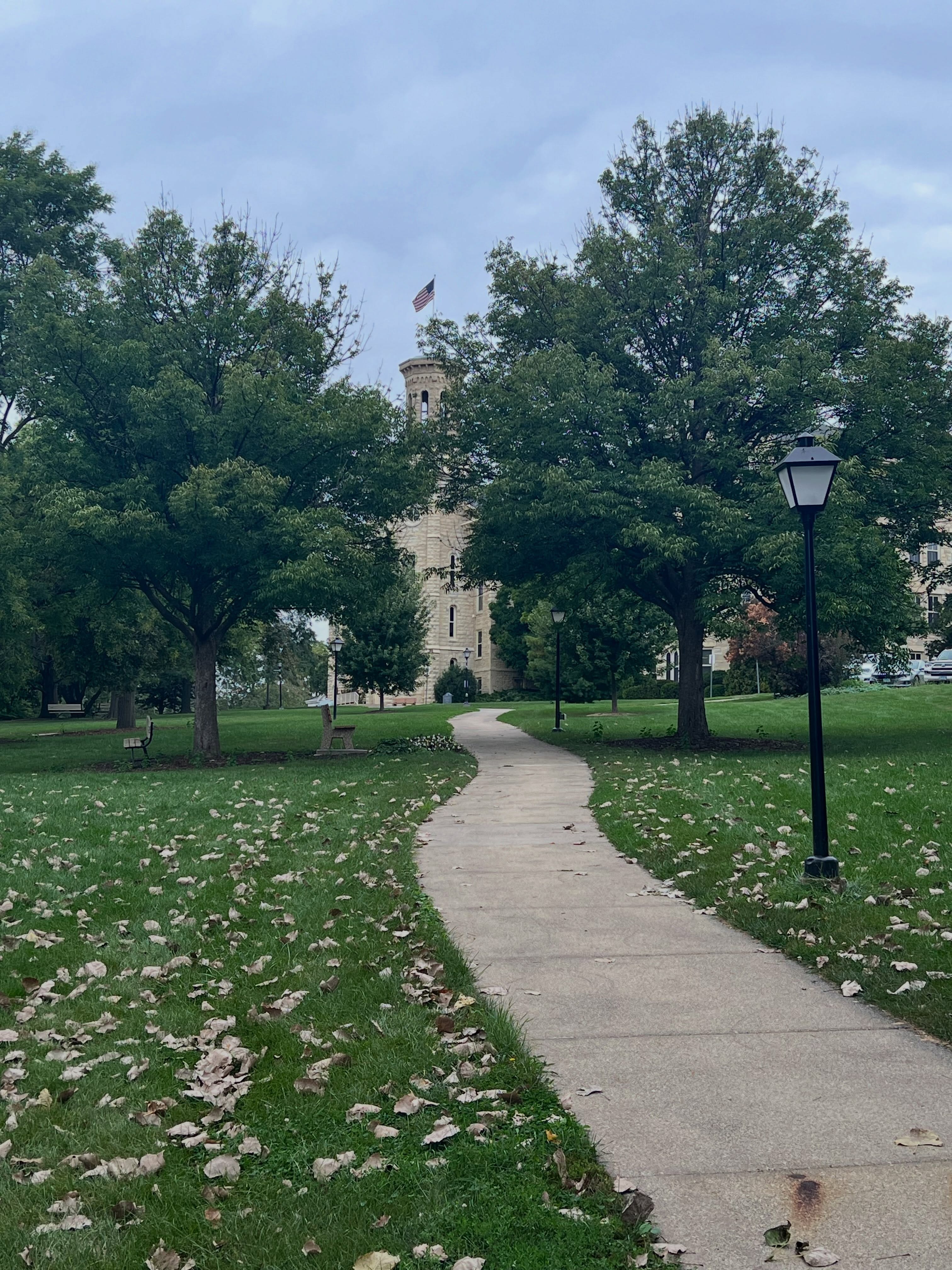
Two months after moving to the UK, I had a conversation with an English pastor that stuck with me. Our family, along with other ministry families, were on a church retreat and standing around a bonfire in a typical English country field. There were sheep nearby. And it was raining.
The pastor said to me:
“The United States is about 50 years behind the UK in terms of secularization.”
And I found myself wondering:
“Could that be true? England is a post-Christian country. Could the U.S. be as well by the year 2076?”
I hadn’t spent much time prior to this conversation comparing and contrasting the state of Christianity in America versus the UK. It’s hard to offer compelling religious analysis when you’ve only lived in a new country for 2 months. But having lived in England for over a year now, I have many more thoughts on the subject! In my Wheaton talk, I analyzed the connection between declining religion and institutional power. What follows below are some loosely organized ideas on the cultural influences shaping the US’ and UK’s religious landscapes that I hope will spark even more conversation.
First off, Christianity is becoming increasingly regional.
This is true in both the U.S. and the UK. In the US, for example, there is a huge difference in the number of practicing Christians and healthy churches in Minnesota, where I grew up, versus Texas, where my husband is from (and where we lived for 10 years). There are pockets of conservative evangelical Christianity in the Midwest along with strongholds in the Bible belt in the southern United States (think Mississippi, Alabama, Georgia, Tennessee, South Carolina, North Carolina, Arkansas, and Louisiana). Alabama, for example, has the highest percentage of residents who identify as Christian in the United States, at approximately 89%. In the south, evangelicalism still heavily influences public life, politics, and culture. Whereas, in the northeast and on the west coast, evangelical Christianity occupies a much smaller share of the religious landscape (approx 12% are Christian).
Conversely, in England, secularization is much more geographically widespread. Every English region saw Christianity decline and “no religion” rise between 2011 and 2021. Two things, however, stand out: 1) England’s cities can be extraordinarily religiously diverse. London is England’s most religiously diverse region. Birmingham, where I live, is 34% Christian and 30% Muslim. Compare that with the picturesque Cotswolds, which is roughly 56% Christian and 37% non-religious, with very small Muslim, Hindu, Sikh, Jewish, and Buddhist populations. And 2) parts of the North West retain some of England’s highest levels of Christian identification.
The terms “post-Christian England” and “Christian America” are unhelpful descriptions on their own. Where you live increasingly determines what secularization actually feels like. For some Americans, Christianity still feels like the dominant cultural norm. For others, it already feels like one identity among many. And in England, “less Christian” doesn’t necessarily mean “less religious”: in cities like Birmingham and London, Christianity’s decline exists alongside significant religious pluralism.
Second, fear of immigrants and cultural erasure is sending some people back to Christianity in both the US and UK.
In the UK, there is a large fear of Muslim immigrants. Many folks, including those in working class communities, believe that getting back to their country’s (supposed) Christian roots will help preserve their own ethno-national heritage and identity. They are looking to Christianity to function as a language of heritage and Britishness, particularly in debates over Islam, immigration, and what British culture actually is. We’ve seen this drive in north Birmingham, where folks are coming to church, many for the very first time, because they want protection and support against other totalizing religions.
In the U.S., similar anxieties about immigration, particularly from Mexico and Latin America, frequently overlap with Christian nationalism. In a recent PRRI survey, 67% of Christian-nationalist “adherents” and 53% of “sympathizers” agreed that immigrants were invading the country and replacing its cultural and ethnic background.
The “return to church” movement should be on our radar for two reasons:
First, it comes at a time where atheism is on the decline. Atheism doesn’t confer the type of cultural foundation that people crave. Secularism can tell people what they no longer believe. It is less equipped to provide the thick cultural identity that religion historically supplied: rituals, traditions, community, transcendence and an inherited story of “this is who we are.”
Second, when national identity feels unstable, religion can become a container for identity. I wouldn’t say we’re seeing a mass return to orthodox Christianity. Rather, people who have discarded religion are now realizing they still want some of the things religion used to supply.
The question I’m asking…
When I look at the religious landscapes of the US and the UK, it’s clear that location matters. So does immigration, class, ethnicity, and the religious identities of the people around you. In some places Christianity is losing cultural power; in others, people are reaching for it precisely because they feel their culture is losing power. And sometimes what looks like renewed interest in Christianity may have as much to do with identity and belonging as belief.
What cultural forces are shaping the religious landscape in your context? Share your thoughts in the comments below.
Want to navigate cultural differences with confidence and care? That’s what I explore in my book, Becoming All Things: How Small Changes Lead to Lasting Connections Across Cultures.
If you read this newsletter and value it, consider going to the paid version to support the work I do. The paid tier gets you access to my Becoming All Things masterclass as well as an archive of trainings on cross-cultural engagement.
Dr Reyes, I would encourage you not to conflate evangelical Protestantism with Christianity. Here in the Northeastern US (which does feel pretty post Christian) we may only be 12% evangelical, but another 43% are Catholic Christians (28%), mainline Protestants like me (11%) or part of historical Black churches (4%). When you acknowledge non-evangelicals as Christians, the ex-vangelical movement (of which i am part) becomes more clearly a movement away from culturally corroded market Christianity toward a genuine (and more traditional) faith.
This is really insightful and precise. Thanks!