

Hey there! I’m Dr. Michelle Reyes, author of Becoming All Things and a leadership coach for folks working in culturally diverse contexts. One of my fave things is to talk with fellow authors, who get the joys & challenges of living globally. I’m excited for you to read my conversation with Anna below. And read her book, if you haven’t!
One of the recurring themes of the Success Culture newsletter is for women living and working in a diverse context (or, cross-culturally or abroad) to be themselves and thrive. It’s taken so much active identity development and mindset work for me to peel back the layers, just say the darn thing, believe in the value of my words and truly, genuinely believe I was meant for this space.
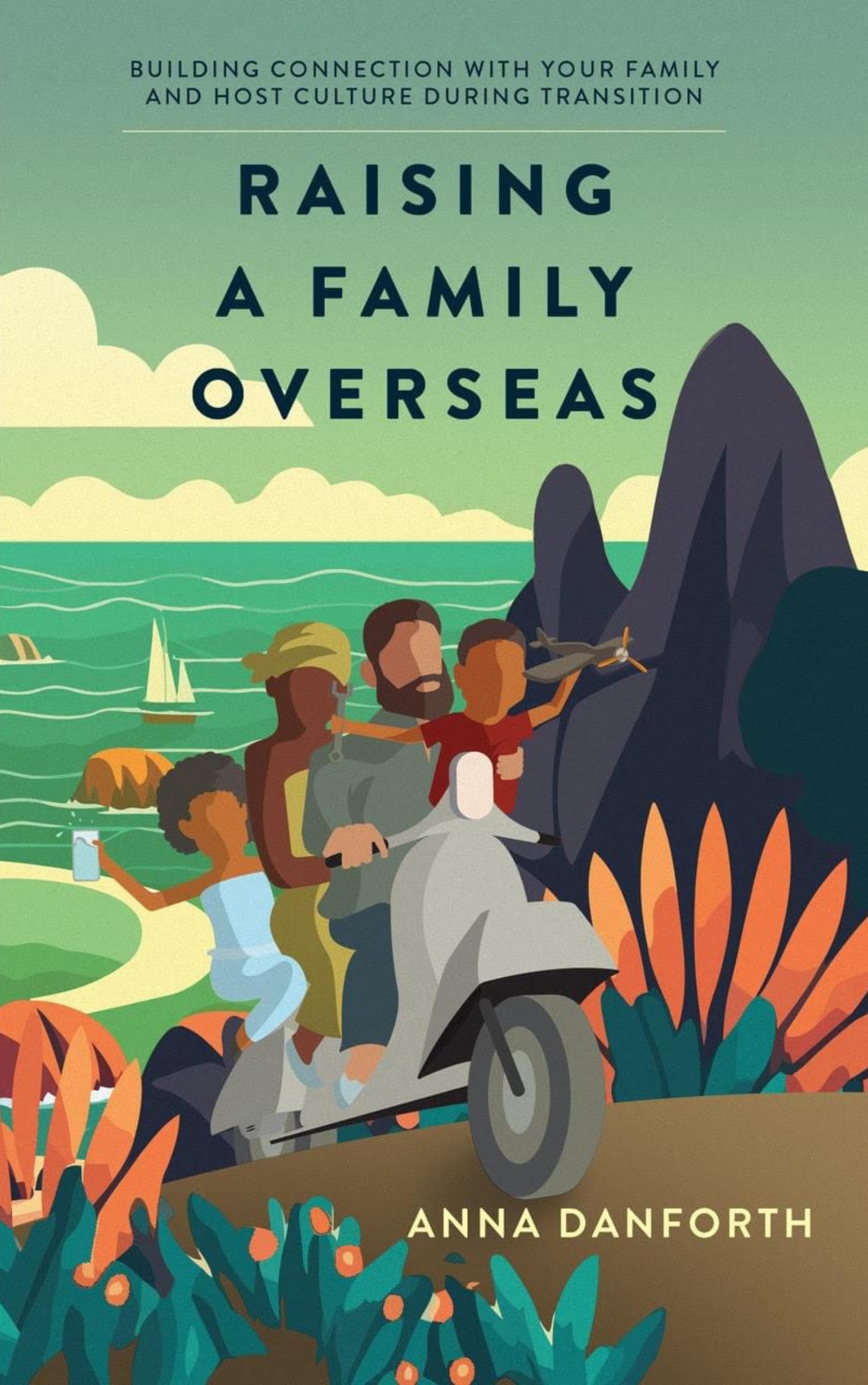
Anna Danforth has been working through these same questions through a specifically familial lens. She is an author, TCK advocate, and traveling speaker/trainer with TCK Training. She was born in California, but attended kindergarten at a French school in Quebec before living in a tiny, rural village in Northern Cameroon where her parents were Bible translators (among many, many other incredible things). She now lives with her family in KwaZulu-Natal, South Africa. Her book, Raising a Family Overseas: Building Connections With Your Family And Host Culture During Transition, interweaves important insights on the role and function of family, and even the community at large, in our collective thriving when you’re a minority in a country.
If you’re trying to figure out how to find yourself again, from everyday joys to the very real questions of skill gaps and how to evolve professionally to fit the context, read on – there’s something here for everyone who is living, working, and interested in cross-cultural life.
You can find so much more about Anna’s work here and follow her on Instagram here.

Right from the start of your book, you say that living abroad is “life-altering.” This is, of course, true on so many levels, even down to the very core of our identity. When we live in a country outside our own, and no one looks, thinks, or acts like us, we begin to question core truths about ourselves: Who am I? Who am I here? Who should I be to these people? For you, it seems like that existential crisis hit when you moved back to the U.S. from Cameroon to attend college in Iowa. You wrote “I felt completely lost. I felt lost because of my whiteness. I had always stood out, but now I looked like 85% of the people on campus. I was lost in a sea of people who looked like me but thought nothing like me.” What is your best advice for minority women (including mothers) who find themselves wrestling through similar questions of identity? How do we find ourselves again? What even is the goal for folks wrestling with these kinds of big identity questions?
Minority groups often cultivate incredibly sharp adaptation skills - and that’s a strong survival mechanism needed to flourish right where they are. However, those adaptation skills for minorities, like Third Culture Kids (the focus of my work), can become so strongly developed that they can venture into the chameleon effect: mirroring the cultural expectations around them so well that they lose important pieces of themselves. Moving somewhere new and repatriation are both big life moments when questions about identity surface—Who am I? Who am I here? Who should I be to these people? TCKs—people who spent their childhood as minorities in a country other than their parent’s one of citizenship—face a defining, inevitable life moment when they repatriate to their parent’s country, one where they no longer look the part of a minority, but culturally, they feel adrift. I experienced this myself moving from Cameroon to college in Iowa.
I learned of a helpful framework from TCK Training called the Identity Anchor. It’s actually an activity designed for children who face frequent moves, but it applies to us all. On your anchor, you list your deepest values and interests (the things that make you feel alive). These are the things that should remain true about you no matter where you go, even if they are culturally out of place. For me, these have included my Christian faith, my love for the outdoors, and connecting with people who value strong family bonds. These are also clues for connecting points with other people–even if they seem unlikely candidates for friendship at first. You clearly share something deeply valuable - and while your lives may look vastly different, this gives you a strong connection point when looking for friends. This may be your faith beliefs, your convictions about social justice, your commitment to give back to your community, or your assertiveness.
The things outside of your anchor are things that can adapt and change, but still allow you to remain true to your core self. This may be the way you connect with people (hosting at your home or going out for dinner), the sports you get involved in (baseball in one place and cricket in another), the way you celebrate life wins (getting pizza with friends or letting yourself have a chill evening alone), or the way in which you express your assertiveness between cultures.
This is crucial for minority parents especially. When living cross-culturally, it is important for kids to maintain an element of “This is who our family is no matter where we go”, along with some flex of, “We can do this differently and it’s going to be ok”. In fact, being able to do this is called a Positive Childhood Experience - one of seven experiences that build strength and resilience in globally raised kids. Moms and dads who create stable and predictable family routines help build a strong sense of identity that kids can take with them wherever they go.
It’s so hard to really know what “success” should look like when you live cross-culturally. In part because there’s so many unknowns. But we all desire to thrive. We want to feel like we’re “winning” and that things are going well. So much of our mental health, joy, and energy is tied up into feeling like we’re “succeeding.” I love how you turn the idea of success abroad on its head. You say: “Connection is your metric for success…Having a successful family experience in a new country is not contingent upon having a positive experience. It is contingent upon family connection, despite how good or bad your experience is.” Yes to naming our own agency in our success! I read this as: we can have a level of control over our life abroad, and our relationship with our family is the vehicle for this. Can you explain more?
Families living abroad face an unusual amount of disrupted life-anchors. They are removed from a constant source of support that others enjoy- such as familiar schools, medical systems, friends, family, and even hidden things like comforting foods, smells, and predictable routines. That’s a lot of disconnection. We now know that one of the biggest health factors both in physical and mental health, is a person’s level of connection to supportive family, friends, community, and even routines.
Michelle, you ask about something so important here—our agency. In the chaos of a big move abroad, when so much feels out of our control, we actually can choose to prioritize connection. Connection in the family, connection with others, and connection to the community. Building secure connection, especially within the family, is known to be the primary indicator of health for kids later on. We don’t stop needing that. For our family, this has looked like a simple ritual we started 12 years ago called sundowners—gathering at the end of each day to watch the sun go down and share about our days. Even now, our adult kids enjoy doing this when we’re together.
For families of faith serving abroad, we can have every good intention of maintaining strong family bonds, but sometimes we get caught up in our work and a common TCK narrative later in life can become, “I wasn’t as important as the people we served.” This has tended to be true especially for missionary kids of previous generations –and this isn’t to blame the parents - we simply didn’t know back then what we know now about how to build secure attachments and why it’s so important. Let’s reprioritize family connection –and may the heart of that be the foundation of the gospel of Christ–where we are called into the deepest, most life-giving type of connection we can experience. And let’s share it with our kids, because God is their one constant that will never change no matter where they go.
Other types of minorities face similar challenges. There’s a desire for connection but it can be hard to find people who understand your particular family dynamics, your cultural expectations that you juggle with expectations of your surrounding culture. This is constant hard work going on in the background of either not being able to open up to others or feeling like you have to defend your family choices. Here’s where it’s valuable to lean into the healthy connections that you do have. Even if they aren’t strong ones. “Weak social ties”—like the same market vendor saying hello to you each week, or inviting your teammate over for games even if you’re very different culturally—these are still grounding, connecting experiences that help create a sense of belonging during seasons of relational drought.
I’m spring boarding from this last question because I also wonder: What does agency and family life look like for single women abroad? I know so many missionaries who are single women in their mid- to late-20s, for example, and who have a hard time relating with other married couples on the field. What steps can single women take to create their own found family abroad? What do positive family experiences look like for them?
I’d like to start by putting the onus on people who have partners, families, or a stable sense of community to be the ones to see and include singles- especially in expat communities. Let’s be the ones who extend invitations because being seen and invited feels good, even if they aren’t able to join. And let’s be mindful of whether our conversations are exclusive- only about our kids or spouses. Let’s find our own identity anchors outside of our family that we can talk about and share with the singles in our lives.
At the same time, I know single women can’t wait around for others to notice them. So I’ve invited single women who have moved to help me answer this question. Positive experiences for one looked like “finding people who are doing things”. She, like many single women, had grown a feeling of isolation because most friends her age were married. And when she got together with them for that life-giving support, they mostly talked about their kids and families–people she loved, but not experiences she could relate to. She began seeking out community events both in her professional field and in her personal world where people were doing things that aligned with her identity anchor. This looked like volunteering with a program she believed was making a difference and participating in a virtual writing club. She began meeting new friends whose interests overlapped with hers. And even if they were married and had kids, they had this big central interest they could talk about.
Some of my single friends have also created their own delightful rituals that help create a sense of connection and celebration—inviting someone over for dinner to celebrate a personal win, organizing a Galentine’s brunch or dinner at a restaurant (celebrated on February 13th to honor friendship), or finding livestreams of like-minded people online to do work sprints together.
A gentle word to single women serving and working in difficult locations, maybe with added security risks, or where women are seen as second-class citizens, or where women in leadership are not heard. I want you to know that you are valuable and your voice carries valuable experiences that people need to hear. You may feel invisible to some of the people around you, but that doesn’t make you less important. You never know who is watching and drawing inspiration from your kindness, your resolve, your assertiveness, your joy. The single missionaries in my community when I was growing up became incredible role models who invested in me. This is the beauty of creating found family: you may be building it for others simply by showing up as yourself, and someone may feel like they can finally grow into who God has made them because you showed them how.
I really resonated with your chapter, “It won’t always be this scary!” There’s so much fear in cross-cultural interactions. What will people think of me? What will people say to me? How will people treat me? And that fear can literally leave us mute, invisible, paralyzed to take action, sometimes keeping us on the verge of tears or even choosing to avoid certain spaces. When I talk to women in particular who are living cross-culturally, there’s always some point in the conversation where they say, “I worry that…” or “I’m scared that…” You talk about unfamiliarity and discomfort as triggers for cross-cultural fear. Can you speak more about this? Why does the unfamiliar scare us so much? What is happening in our mind, heart, and body? And does telling ourselves, “It won’t always be this scary,” truly help us move past the fear?
The kind of fear you’re describing that leaves you mute, paralyzed, on the verge of tears, choosing to avoid certain spaces altogether, is very real. And there’s actually something happening in your mind, heart, and body that explains why the unfamiliar can feel so scary.
I wish I could say that all it takes is telling ourselves, “It won’t always be this scary”, to get over culture shock, but I definitely can’t! However, there is power in being able to speak truth that this season when everything feels unfamiliar is indeed just a season and that someday, things will feel familiar. Or at least, easier to read.
In your mind: When we move somewhere new, our system is designed to survive. That means we’re on higher alert than usual because we don’t know which sounds, people, experiences, and places are safe or dangerous. We don’t know what we can trust or what will cause us harm. When I first moved to Lesotho, I heard a strange noise at night and I got scared. I had been told that violent home invasions were on the rise and I didn’t yet have enough experience for my brain to process whether the noise was a signal of danger or not. As the weeks unfolded, the noise became familiar—simply someone banging open and shut a large trash bin—and my fear subsided. So every sound or place may feel unsafe, or at the very least, be something our brain has to use extra energy to discern.
In your body: This is an exhausting process because our body is in hypervigilant mode for long periods of time as we learn to navigate all the new senses and experiences around us. Hypervigilance for a short amount of time can be useful. But for extended periods of time, it puts us in the Red Zone, putting an extraordinary amount of pressure on our brains and systems while we learn the ropes.
In your heart: And to make things harder, it’s happening to every member of the family. So right when you children need you the most is often right when you have the least amount of bandwidth to be patient, kind, and extra caring. It’s a common expat experience.
This is where I do find it helpful to remind myself in new environments, “This feels scary. I don’t know how to interpret this. And my body is just giving me signals to keep me safe. But for the people living here, this is normal. Someday, this will feel normal to me too. Or at least I’ll understand it better.”
Evolving feels like an implicit theme in your book. There is something inherent about being a minority in a community, city, country that inevitably shapes not just who we are but what we do, even what skills we use, and how we lead. I was thinking about this when you talked about “cultivating the appropriate life skills for flourishing in a new environment.” What worked for us (in terms of what we said, did, showed up, worked) may not translate into a different cultural context. How do we become perceptive to this shift? How do we know when we need to adapt our skill sets and evolve? Are there certain shifts in our body or clues in conversations or interactions with other peoples that provide “aha moments” for us to say, “Here’s my gap. Here’s where I need to develop a new skill to thrive”?
One of the hardest parts of cross-cultural living is realizing that the things that helped you flourish in one place might actually work against you in another. It can feel disorienting, maybe even like you’re losing yourself.
The clues that something isn’t working show up in different ways. Sometimes it’s a feeling in your body—a repeated sense of awkwardness or confusion in interactions that used to feel natural. Sometimes it’s noticing patterns–you keep getting passed over for opportunities, or your contributions in meetings are met with silence, or people seem confused by your approach even though you’re doing what always worked before. Sometimes a trusted person will give you direct feedback that stops you in your tracks.
Cultivating the right skills for flourishing starts with being a great observer and asking really good questions: “In this context, what do people value? How do they achieve these values? What does leadership look like here? What does flourishing look like here? What about me needs to remain true to myself and what can adapt in order to build a thriving life in this context?” These are important questions to ask for those who want to go beyond the surface of cross-cultural living and take on the challenge of learning who they are at their core and what they’re willing to change in order to play with the long game in mind.
I experienced this firsthand when I moved from Cameroon to the U.S. Growing up in a traditional, rural African setting, I learned that flourishing included averting eye contact with elders, using a soft voice with elders, and deferring to those in authority. This worked well. Until it didn’t when I was a student-teacher in Iowa. Suddenly, the habits that had served me so well were working against me. My teaching mentor played a crucial role in helping me understand what skills were valued in the US—including assertiveness, clear goals, rising to the challenge, and showing potential employers what I was capable of. I was like a sponge with her critical wisdom and was so grateful that she helped me understand exactly what was held in high regard instead of being afraid of whether she was damaging my sense of self. Her mentorship and my ability to apply what I learned landed me a job at an excellent school and soon after that put me in a leadership position.
My core values of respect, hard work, chasing my dreams, and doing my work as unto the Lord were all the same. How I got there adapted to the culture.
Many folks in ministry spaces know the question: “What was your high and your low today?” There’s many variations, like “What were today’s roses and thorns?” We also ask similar questions to our kids at the end of each day as a way to remember and reflect. But you offer a different question. You suggest asking: “What was funny today?” Living cross-culturally is HARD. No one who’s lived abroad or done cross-cultural ministry denies that. Though we do forget at times to laugh or find humor in the mundane, and sometimes we can’t remember when we last smiled. Can you say more about what makes it hard for you personally to find humor in the everyday life of living cross-culturally, but also the ways that coming back to humor (and perhaps also smiling and laughing more) has shaped your joy and resilience for a place?
I want to start by acknowledging that not everything holds humor. Some seasons are truly dark—grief, trauma, deep loss—and those need to be honored for what they are. But I’ve also found that some events that feel hard or frustrating have invited me to honor the frustration and also look for something else alongside it.
The daily, little things that impact you negatively about living cross-culturally do add up. It’s like a constant rub wearing you down in the same place, and I call this “sandpaper”. Whatever your sandpaper is– being pulled over by intoxicated soldiers, misunderstandings with your child’s school system, inefficiency, corruption that weaves into daily life, being stared at, being dismissed due to your sex or ethnicity–it takes its toll and can overshadow some of the positive parts of living abroad, including your sense of humor and the things you would normally delight in. Sandpaper turns your child’s glitter mess on the table turns from being cute and instagramable to being a rude interruption. It turns the chaos of a roundabout in Asia from a hair-raising adventure to a rage-inducing moment. And sometimes it turns really kind people into cynics and naysayers. Sandpaper has definitely made me face my sin nature head-on.
And in the same way that intentionally looking for and expressing gratitude is known to start re-training our hearts toward gratefulness, looking for and recounting funny things starts training our eyes toward the lighter side of life. This doesn’t mean we gloss over the hard stuff. But we make room to be on the lookout for joyful things, funny things, delightful things that we can share around the dinner table. My husband has been waiting for four years for his pilot license to get validated in South Africa. It’s been a deep source of sandpaper due to one person losing important paperwork, forgetting what we’ve submitted, ghosting us, and giving us the runaround. On one hand, extremely discouraging. On the other hand, it’s become so unbelievable, so “out of this world” that we’ve shaken our heads and shared some laughs over it. We still get super frustrated about it, but we’ve also had some exasperated giggles. This has built some resilience along the way because I’ve learned that even though some things are totally out of my control, I may have some power to shape the attitude I bring to even frustrating situations. Looking for humorous things to share with my kids pivoted some of my sandpaper moments from only frustrating to actually kinda funny. And these stories increased the laughter and the Green Zone moments we shared as a family while still being able to talk about the sandpaper.
When we get bogged down by life, fun is one of the first things to go. I’ve had to stop and ask myself sometimes, “Are my kids seeing me have fun? Are they seeing something light up my world?” Asking this opened me up to things like taking my own wishes seriously and pursuing going on hikes, tip-toeing to the edge of a gorge to peek over the edge, and saving my pocket money to buy my dream dog—a wirehaired Dachshund named Lenox. This helped me say yes to new adventures and try things I wouldn’t have otherwise.
Living as a minority in a new culture asks a lot of us. How do we adapt while staying true to ourselves? How do we create connection in a life of mobility? These things can feel overwhelming, and yet we don’t have to have it all figured out to start trying. When we remember that Christ left the perfection of heaven to become God-in-flesh, that he was mobile and a traveler yet deeply connected to the people right in front of him, that he could bend and not break, and that we’re made in his image, we’re reminded that pursuing connection through shared life, adapting when needed, and remaining true to our deepest truths is sacred and holy work. And our children are learning by watching what makes us uniquely us no matter where we are.
I loved Anna's example of needing to adapt to the teaching position in the states: "My core values of respect, hard work, chasing my dreams, and doing my work as unto the Lord were all the same. How I got there adapted to the culture."